Field Demonstration Case Study

Field Demonstration Case Study
Alsip Fire Department · Alsip, Illinois · September 18, 2026

One FS2-MAX vs. a Fully Involved Living Room

An acquired-structure live-fire demonstration. A single hand-thrown unit knocked down a fully involved, vented room-and-contents fire in about ten seconds.

1
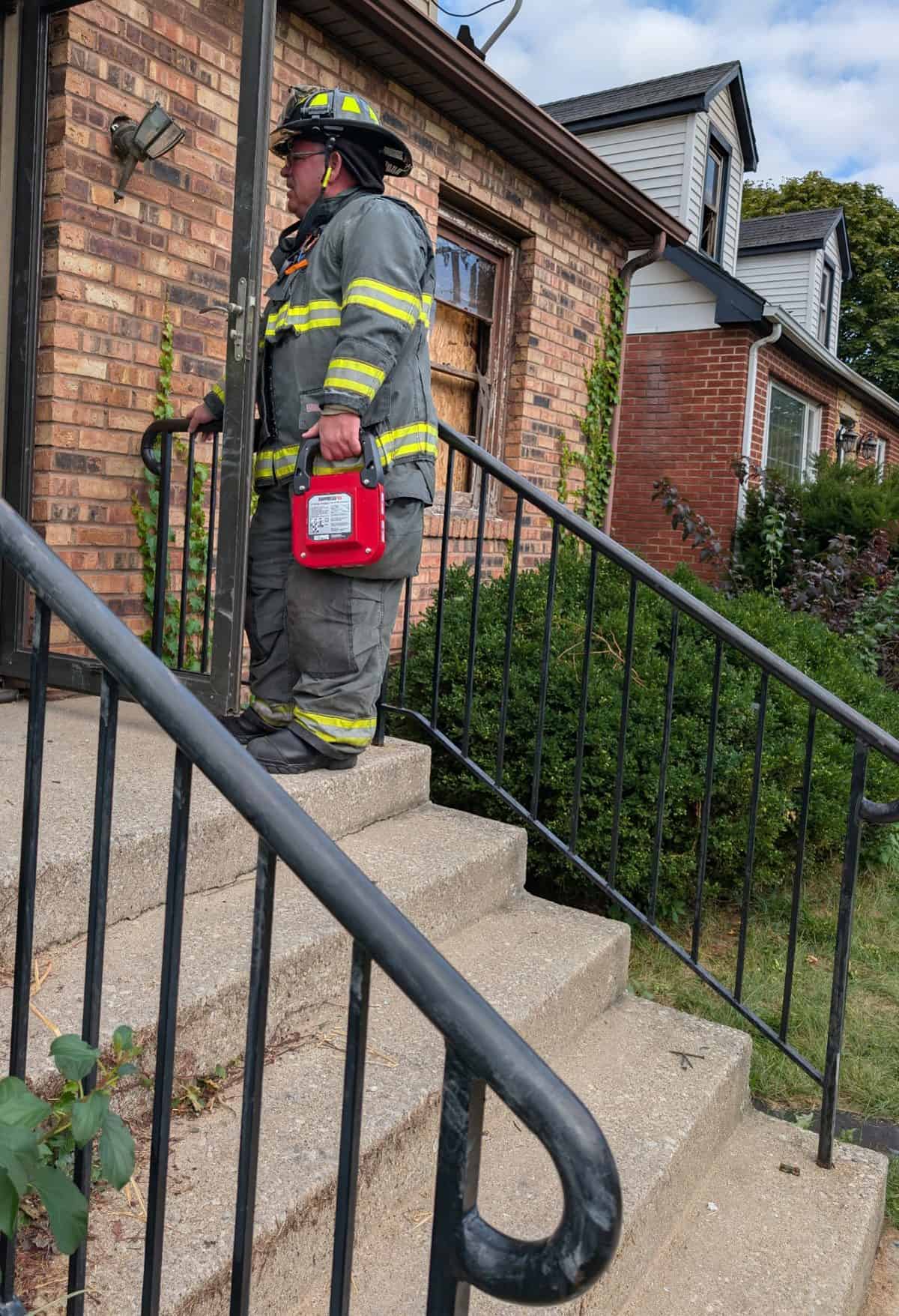
FS2-MAX unit, hand-thrown through the front door
~10 sec
from agent discharge to knockdown (video)
300°F
ceiling temperature at hose team entry (thermal imager)
~30 gal
of water used, for overhaul only
Watch the Demonstration
1:23 · Opens on YouTube
 
Alsip Fire Department demonstration of the Suppressall FS2-MAX, September 18, 2026.
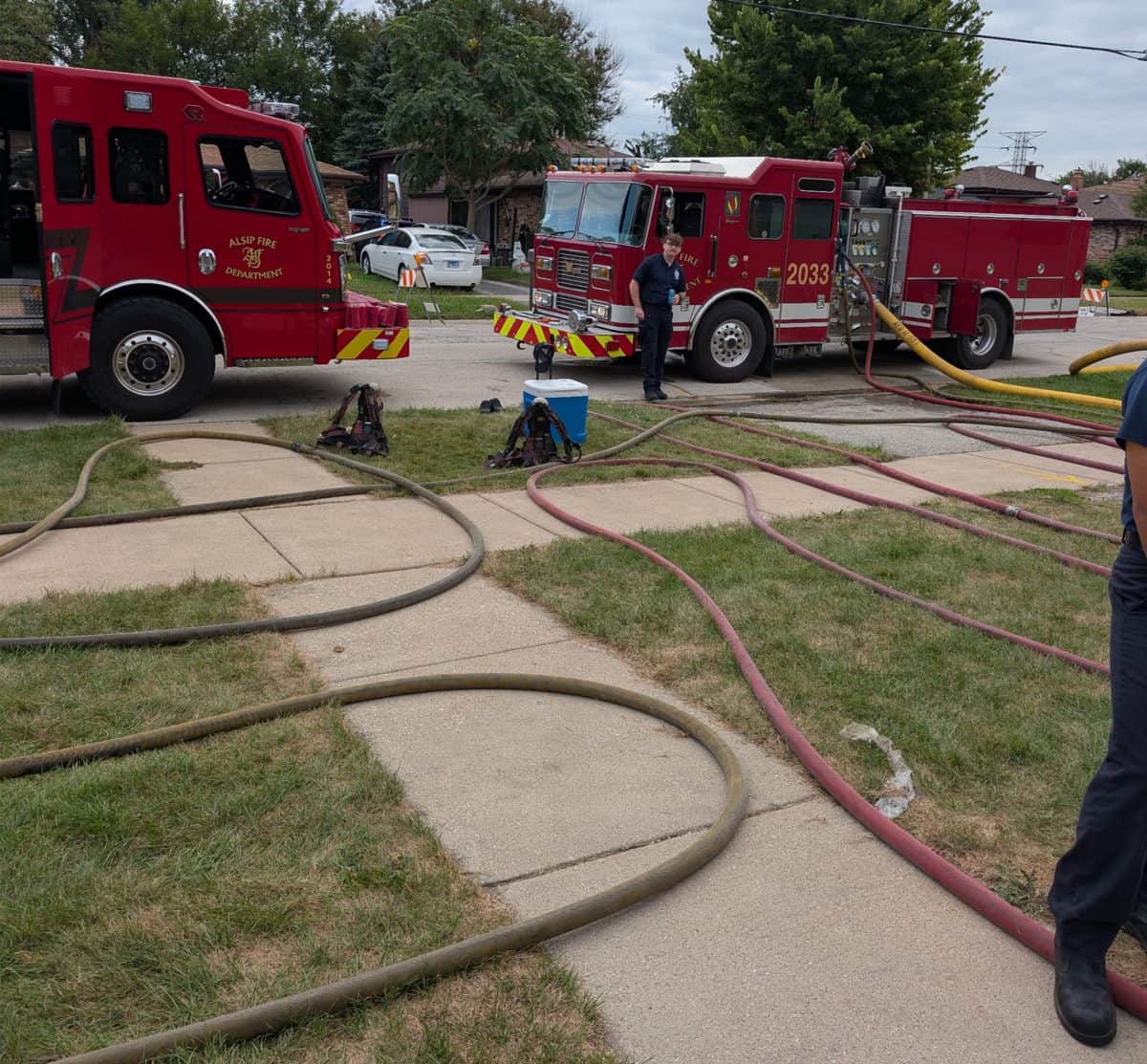
Alsip Fire Department engine and truck on scene with supply lines laid across the lawn
Alsip Fire Department on scene at the acquired structure.

The Setup

The Alsip Fire Department requested the demonstration and ran it in a two-story, single-family residence of ordinary construction. The fire was built in the living room from a loveseat, several wooden pallets, straw and cardboard, then allowed to develop until flames reached the ceiling and began running across the room toward the hallway.

The room was not sealed. The ceiling above the fire area was open, giving heat and agent a path upward, and the doorway to the kitchen was left open. Both conditions work against a total-flooding agent, which depends on holding concentration in the space.
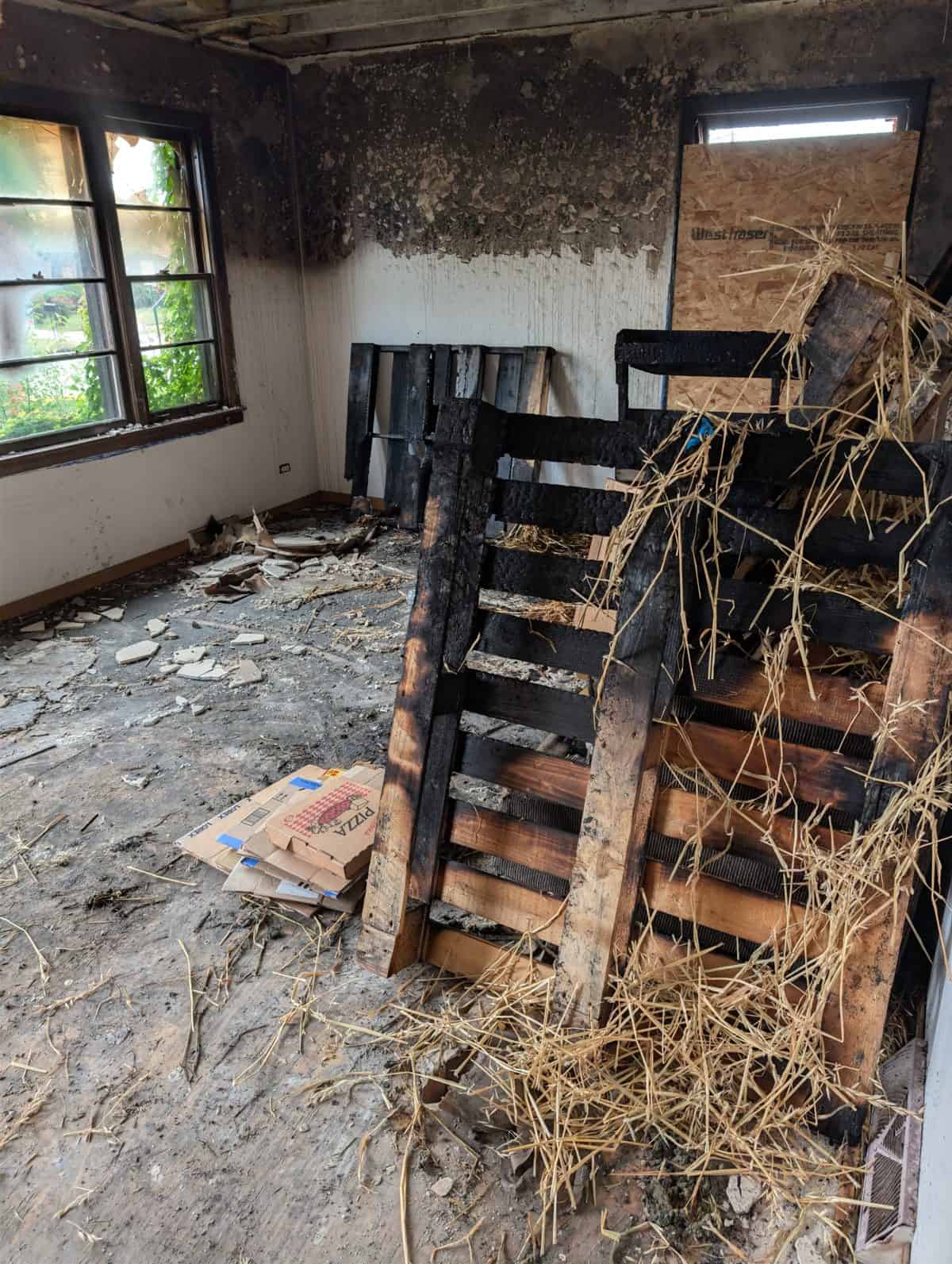
Wooden pallets, straw and cardboard stacked in the living room
Part of the fuel load before ignition: wooden pallets, straw and cardboard.

The Deployment

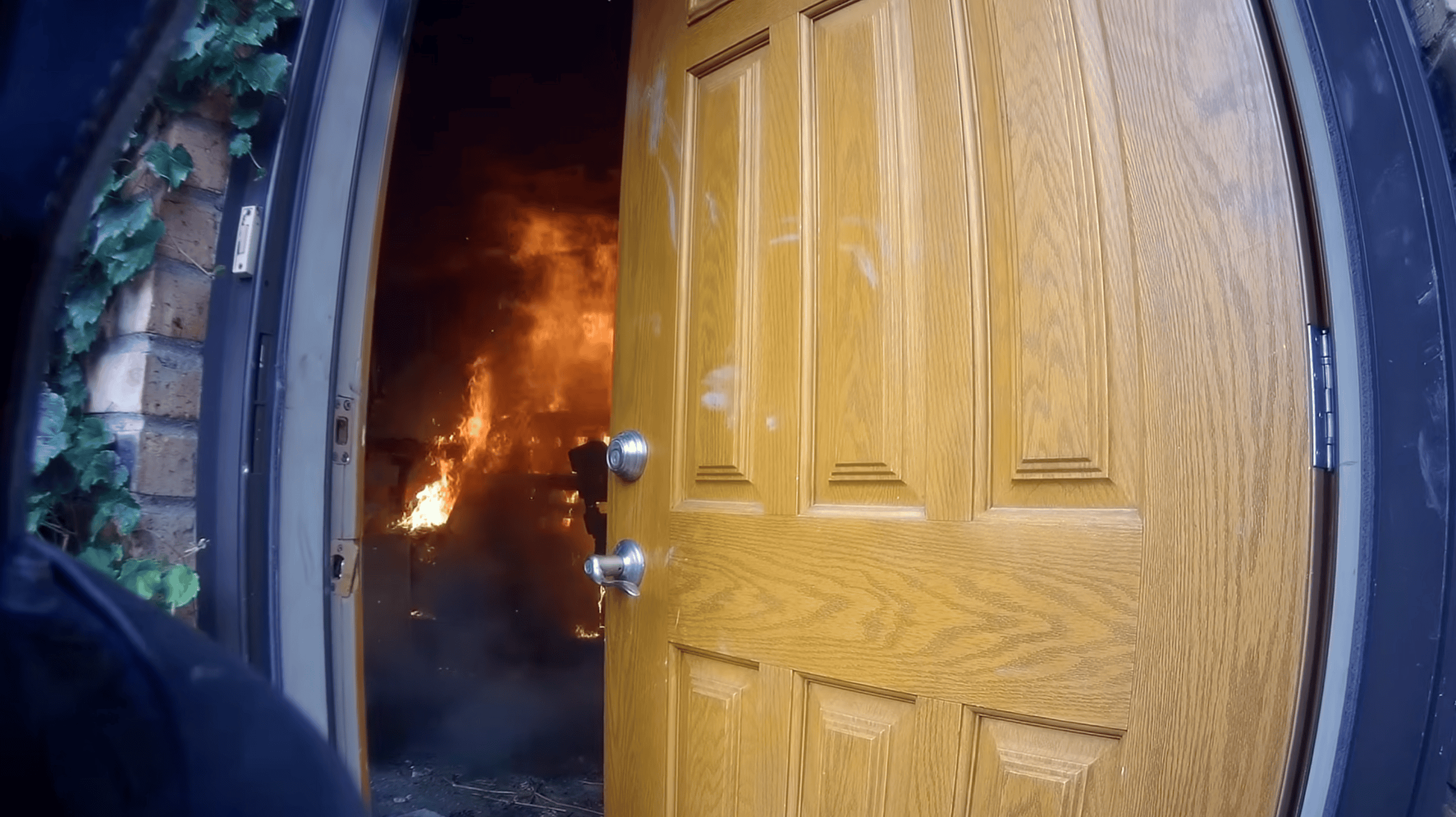
About three minutes after ignition, a lieutenant pulled the pin, tossed a single FS2-MAX into the living room from the front door, and closed the door. There was no interior entry and no water applied before or during discharge.
Living room fully involved, flames floor to ceiling behind the window, video frame
Before: fully involved, flames floor to ceiling, seen through the front picture window (frame from video).
The fire room through the picture window, filled with agent haze and no visible flame, video frame
During discharge: the agent cloud filling the room, with no visible flame (frame from video).

The Result

On video, the fire was knocked down in roughly ten seconds after the agent cloud appeared, going from full involvement to no visible flame. After discharge ended, crews waited about one more minute, then sent in a hose team. They found a small amount of fire still under the loveseat, measured about 300°F at the ceiling, and completed overhaul with approximately 30 gallons of water. Remaining smoke was cleared with a PPV fan. There was no fire extension to other areas.
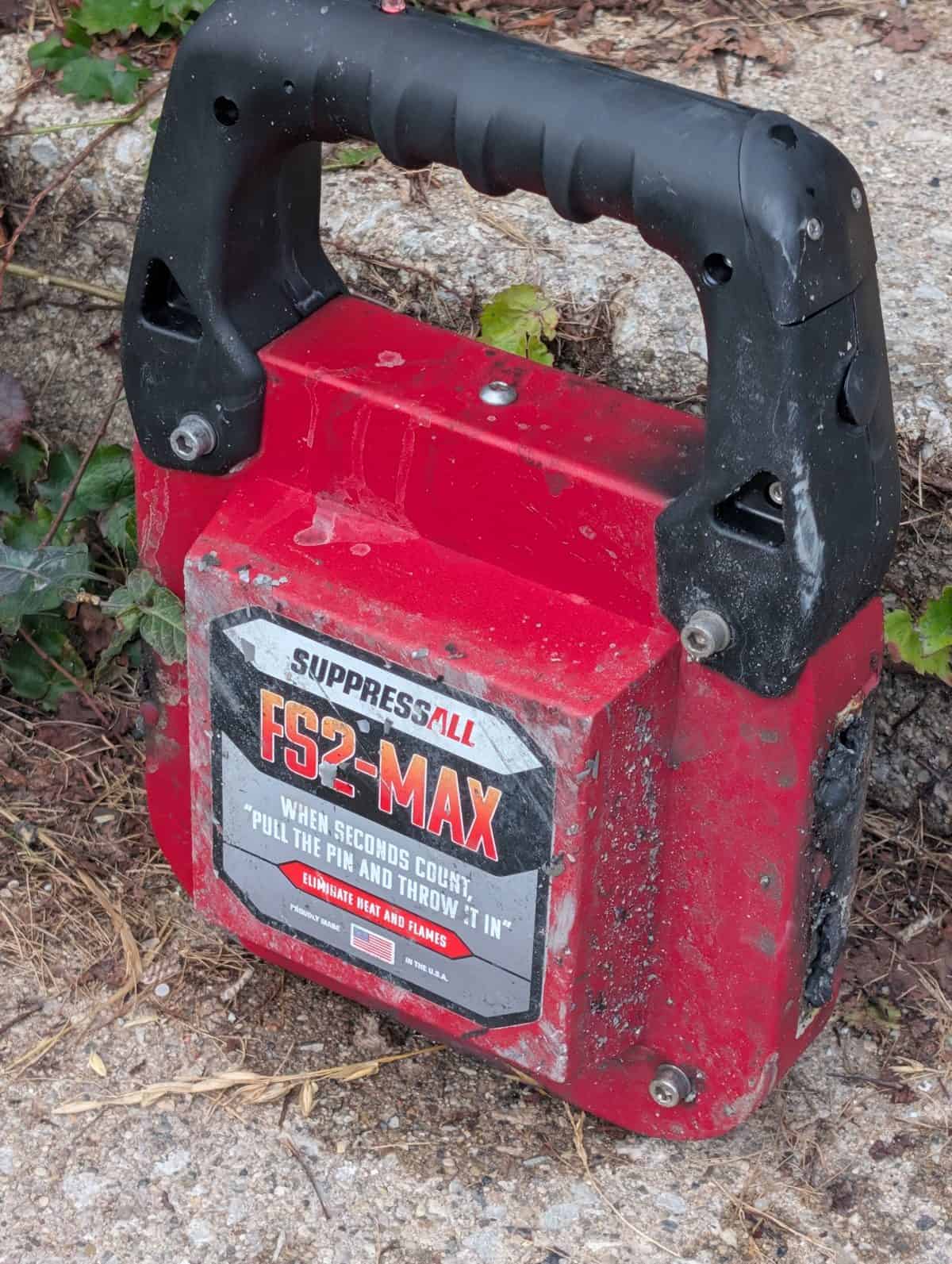
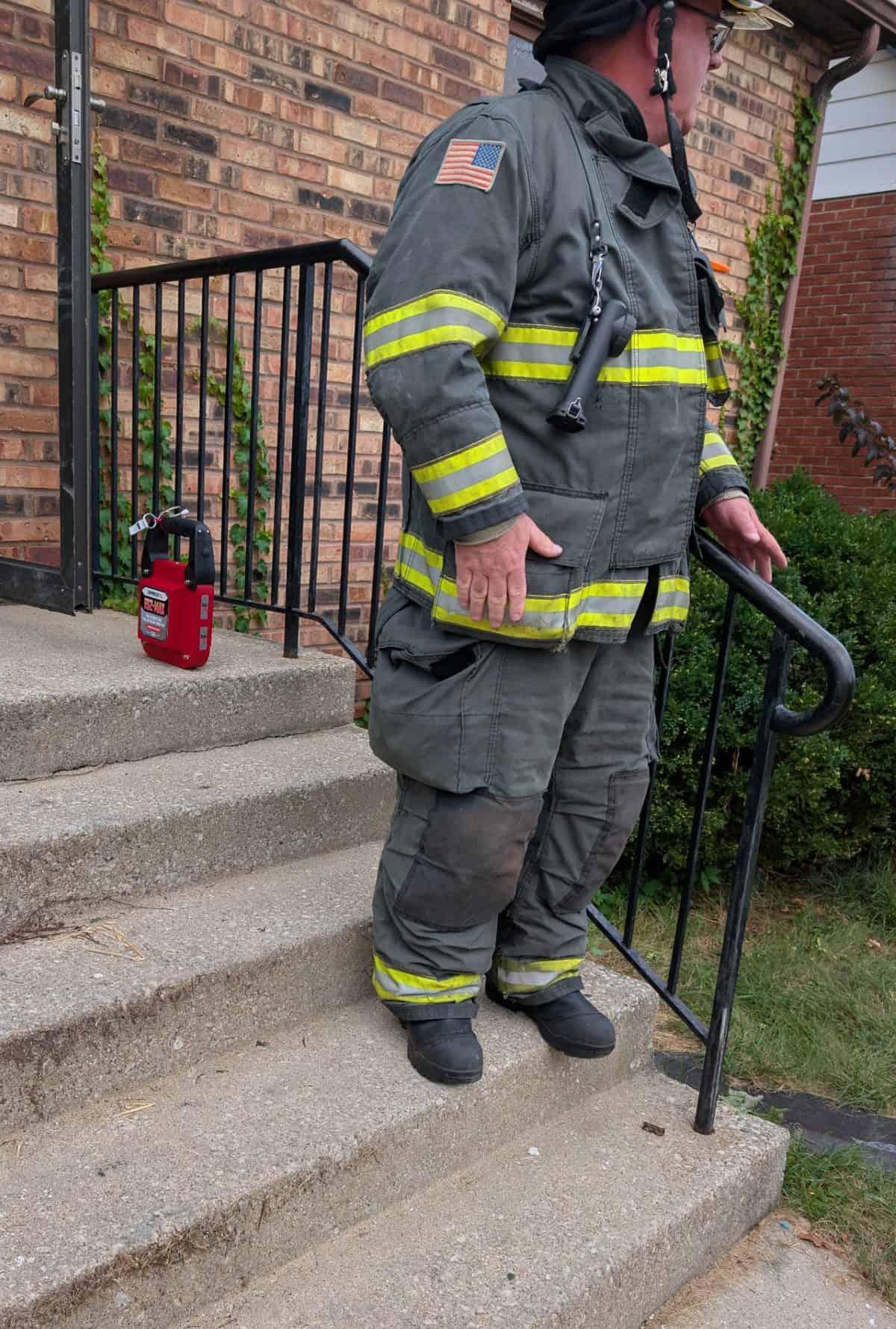
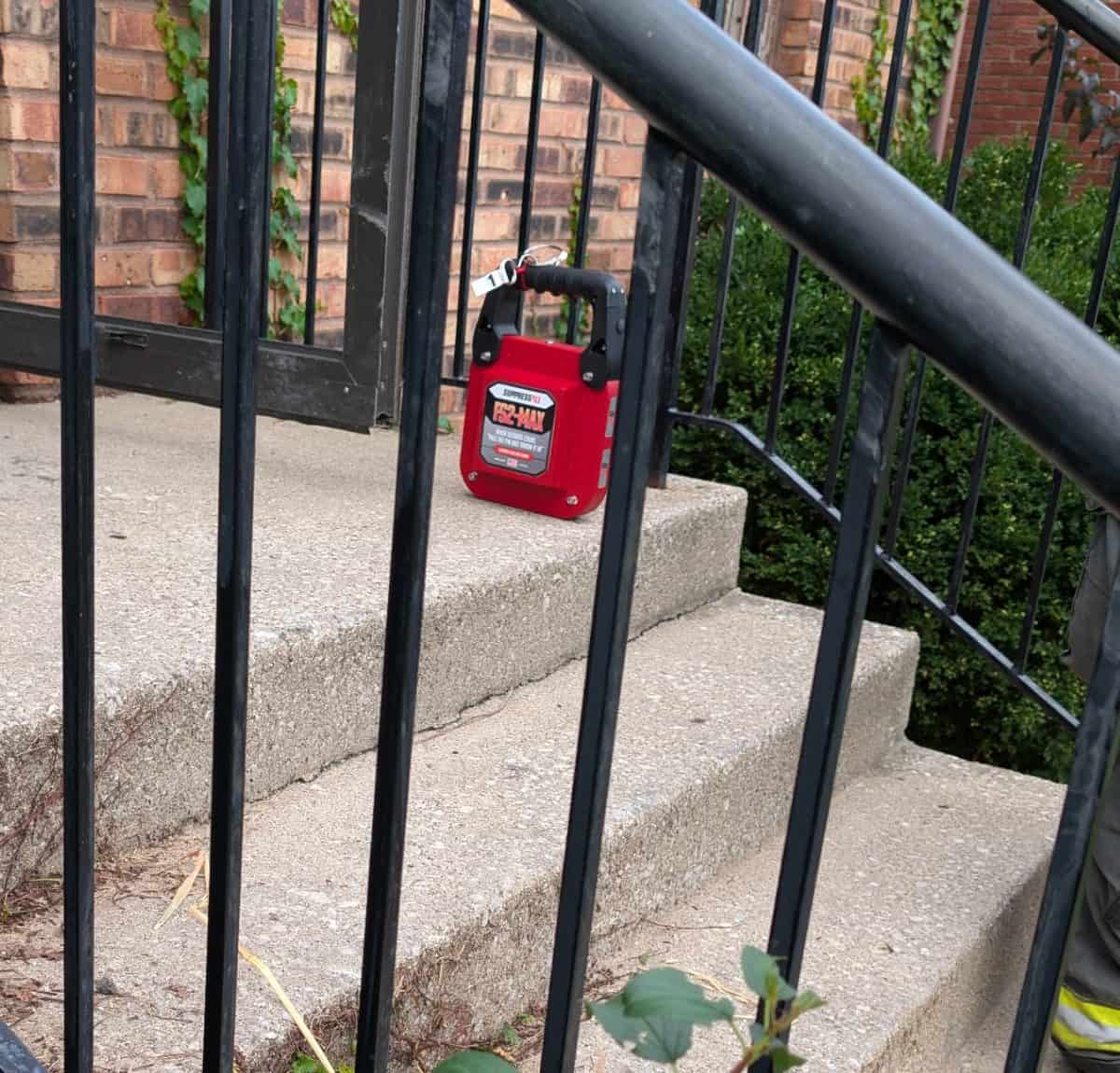
The discharged FS2-MAX with scorching along one side, label still readable
The FS2-MAX after discharge. Housing, handle and label intact after sitting in the fire room.
“

By far, this device is a game changer for departments that might have units arrive on the scene before suppression companies such as staff vehicles, ambulances or apparatus without an on-board or minimal water.

Thomas Styczynski, Fire Chief, Alsip Fire Department

Where the FS2-MAX Fits

Chief Styczynski concluded that the device was very effective in slowing the spread of the fire and removing heat, allowing suppression companies to reach a quicker knockdown with less heat impact on the crew.

The FS2-MAX is built for the first unit on scene: staff vehicles, ambulances, ladders and squads that arrive before an engine. It doesn't replace the hoseline. It buys the crew a darker, cooler room when they get there.

Crews should expect near-zero visibility in the room after discharge. The Alsip hose team entered with a thermal imager, which is also how they read the ceiling temperature.

Thank you to Chief Styczynski and the Alsip Fire Department for hosting.

Scroll to Top